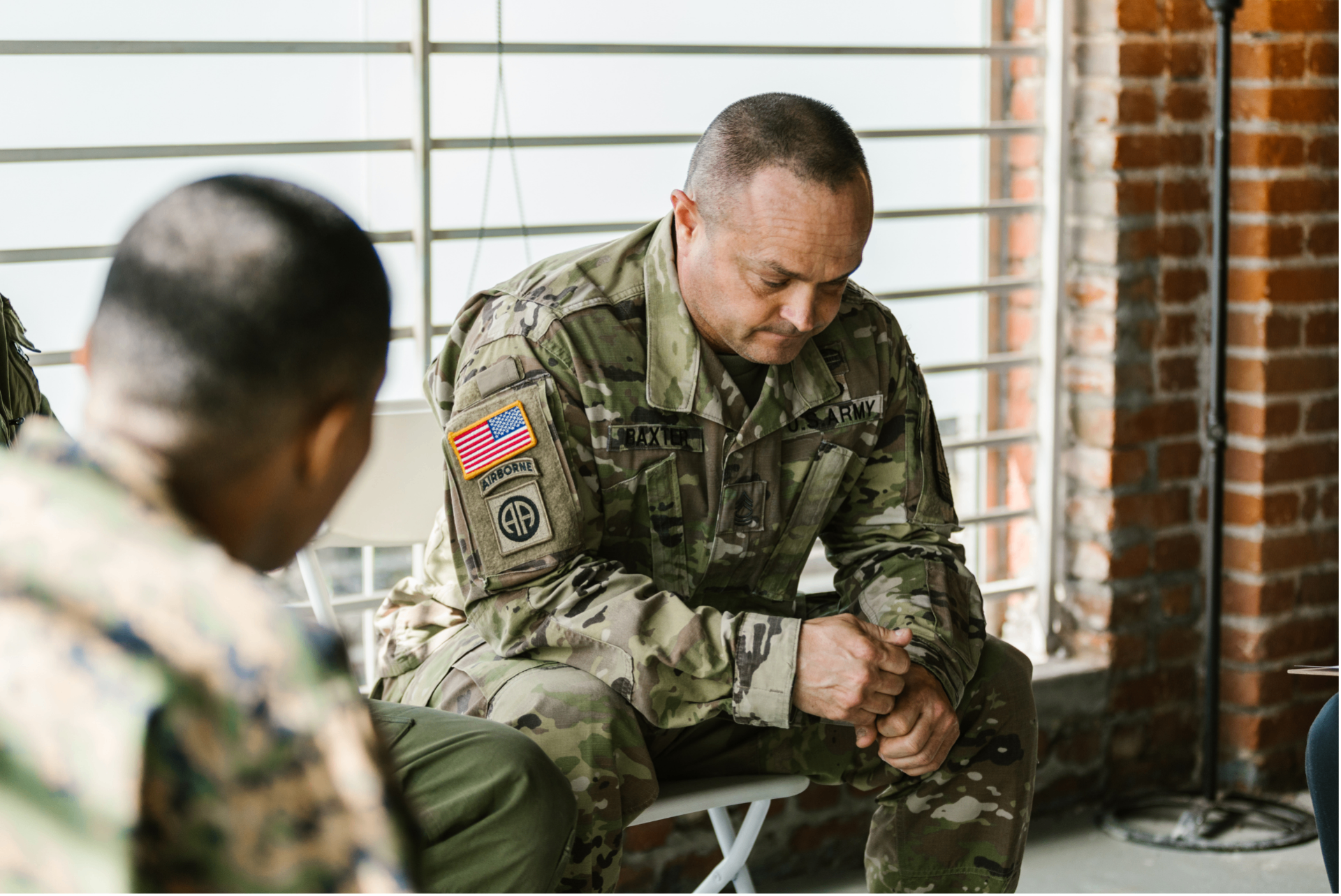
Between 10 and 20% of combat veterans develop PTSD (15.7% among U.S. veterans of Iraq and Afghanistan). Among those exposed to direct combat or to non-combat operational trauma (sexual assault, training accidents, repeated deployments), the rate climbs higher still. The numbers are familiar to anyone in the field. What is less often discussed is what happens next.
The downstream cost
PTSD in military populations does not stay confined to the diagnosis. It propagates outward across years and across systems.
Opioid exposure. Iraq and Afghanistan veterans with PTSD are 2.6 times more likely to be prescribed opioids for pain than peers without a mental health diagnosis, and far more likely to receive high-risk regimens such as combined opioids (Seal et al., JAMA, 2012).
Suicide. The link between PTSD and suicide risk is well-documented and persistent across decades. Veteran suicide rates in the United States have remained stubbornly above the general population baseline.
Disability and lost productivity. PTSD is among the leading conditions driving veteran disability claims, with annual program costs in the tens of billions of dollars across major military payers globally.
Family and social burden. The diagnosis travels into spouses, children, and communities. The cost is not only fiscal.
Why standard care underperforms in this population
The gold-standard interventions: SSRIs and trauma-focused psychotherapy, produce meaningful response in only a minority of military patients. Three structural reasons account for this gap.
Cognitive load. Trauma-focused therapy requires sustained engagement with the original event. Many service members find this incompatible with mission readiness, with the operational identity they have built, or with their willingness to relinquish protective dissociation.
Medication side effects. SSRIs produce sexual dysfunction, weight gain, emotional blunting, and other effects that conflict with the physical and psychological demands of service life. Adherence is poor.
Stigma and career risk. Despite progress, the perceived professional cost of a documented mental-health diagnosis remains real. Service members underreport. Treatments that require visible engagement face an uphill adoption curve.
"The population with the highest prevalence has standard treatments that don't fit their lives."
What this population needs from a therapy
The criteria are unusually specific, and any new intervention should be measured against them.
- Drug-free: no daily medication, no impact on performance or mission readiness, no tox-screen complications.
- Durable: meaningful effect across deployment cycles, not requiring weekly clinical engagement.
- Discreet: receivable in an outpatient setting, with minimal visible signal to peers or chain of command.
- Reversible: adjustable or removable if duty status changes.
- Mechanism-targeted: addressing the underlying autonomic dysregulation rather than masking symptoms.
A favorable payer environment
Military payers, from the U.S. Department of Veterans Affairs and the Department of Defense to equivalent agencies across NATO allies, show a growing willingness to fund non-pharmacological PTSD interventions. Programs targeting suicide reduction, opioid alternative pathways, and operational readiness have created reimbursement and procurement pathways that did not exist a decade ago.
For a therapy that genuinely fits the population's needs, the payer infrastructure is moving in the right direction.
TraumaTone, an investigational bioelectronic implant, is designed to meet these criteria: drug-free, outpatient, durable and adjustable. Its safety and efficacy in humans remain to be demonstrated. Military populations are also where a successful intervention would produce the highest measurable downstream impact: on suicide, on opioid use, on disability, on readiness.
For Stimalia, the military population is not a niche market. It is a proving ground and a moral obligation.