For decades, the prevailing view of PTSD was psychological: a disorder of memory, cognition, and meaning, to be addressed with therapy and serotonergic medication. A growing body of clinical literature suggests a different framing, one rooted in the autonomic nervous system rather than the mind.
The signal comes from an unlikely source: anesthesiology.
A procedure with an unexpected effect
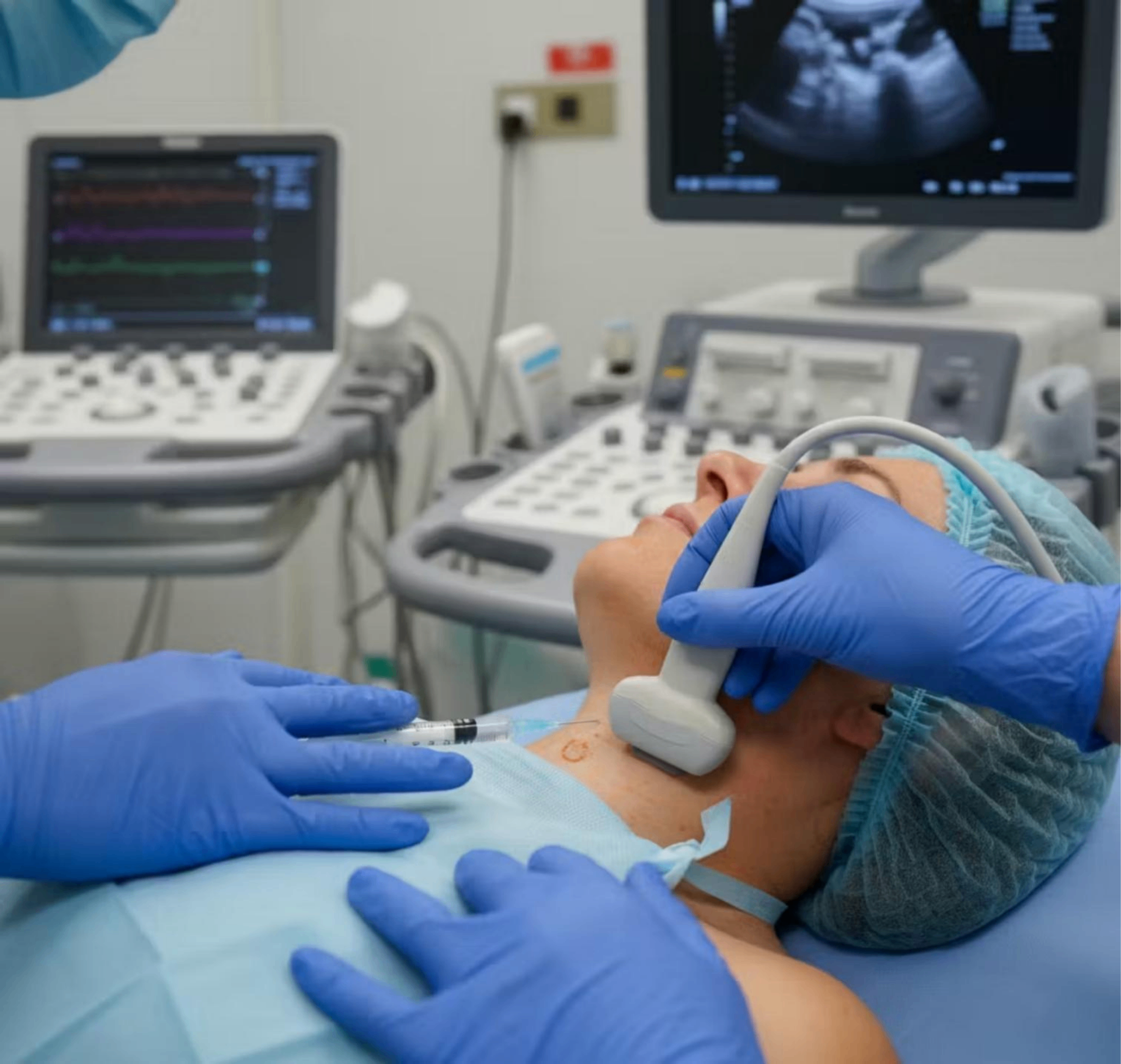
Stellate ganglion block: a brief, image-guided injection of local anesthetic into a cervical sympathetic structure — has been performed by anesthesiologists since the mid-twentieth century. Originally indicated for complex regional pain syndromes and certain vascular conditions, it remained a niche pain-medicine intervention for decades.
In the early 2000s, military physicians treating wounded service members began noticing something that wasn't in the textbook. After a stellate ganglion block performed for chronic pain, patients with co-existing PTSD reported, sometimes within hours, that their hypervigilance had eased, their sleep had improved, and their intrusive symptoms had dropped and in some cases dramatically.
A series of case reports became case series, became open-label studies, became randomized trials.
"Multiple peer-reviewed studies now place the response rate at 70–80% of treated patients across both military and civilian populations."
Why it works
The stellate ganglion is the principal sympathetic relay for the upper body. Through it pass the fibers that govern heart rate, vascular tone, and the autonomic correlates of fight-or-flight. In a healthy nervous system, this signaling is contextual. It activates when needed and quiets when the threat passes.
In PTSD, it doesn't quiet.
The autonomic alarm remains chronically elevated. Cortisol patterns flatten. Heart rate variability collapses. The body keeps preparing for a threat that is no longer present. Mood, sleep, attention, and intrusive symptoms follow downstream.
A stellate ganglion block briefly interrupts that loop. The sympathetic outflow is paused. The autonomic system gets the chance to recalibrate, often producing rapid and meaningful symptom reduction. The intervention is reversible, repeatable, and remarkably well-tolerated.
The limitation
The benefit is real, but the delivery is not yet ready for primetime adoption.
A pharmacological block lasts hours to weeks. Symptoms tend to return as the anesthetic clears. Patients require repeat procedures, practical for a pain clinic, less so for a chronic psychiatric condition. Effects vary by injection technique, by operator, by depth and concentration of agent. The therapy is operator-dependent in ways that resist scale.
In short: the science is settled. The delivery is the limitation.
What comes next
If a transient pharmacological block produces a meaningful response in most patients, the natural question is whether continuous, programmable modulation of the same target could extend that response across years, while removing operator and pharmacology variables.
This is the bet behind a new generation of bioelectronic medicine.
The PTSD field is in the early stages of a shift in framing, from a disorder of thought to a disorder of physiology. The clinical evidence for autonomic intervention is robust enough that the bet now is on how that intervention is delivered: durably, predictably, at scale, in a single procedure rather than recurring injections.
Stimalia is building toward that delivery. The science is no longer the bet.